Clinical Approach Results Chest Anatomy Simon Classification Techniques Outcomes & Safety Patient Selection Surgeon FAQ Technical Guides Consultation
Istanbul · Male Chest Surgery

Discreet, technique-driven gynecomastia surgery.

Gynecomastia is common. Talking about it is harder than it should be. Assoc. Prof. Dr. Ayhan Işık Erdal offers a confidential, judgement-free consultation — and a surgical plan matched to your Simon grade, not to a one-size-fits-all protocol. Periareolar scar hides at the natural areolar border. Liposuction, pull-through or gland excision, selected by anatomy.

F
FACS
American College of Surgeons
E
FEBOPRAS
European Board of Plastic Surgery
30+
Peer-reviewed publications
ASJ, PRS, Annals of Plastic Surgery
A+
Accredited hospitals
MoH international authorization
Assoc. Prof. Dr. Ayhan Işık Erdal at ACS Clinical Congress 2025 — FACS induction ceremony
Fellow · FACS
American College of Surgeons · 2025
Six principles of technique-driven gynecomastia surgery

Gynecomastia is not one condition — it is a spectrum of tissue compositions from pure fat (pseudogynecomastia) to dense fibrous gland to mixed presentations with skin excess. The operation must match the anatomy. Below are the technical commitments that guide every gynecomastia case in this practice.

01

Simon-grade driven technique selection

Grade I and IIa: liposuction-predominant approach. Grade IIb with fibrous gland: pull-through or formal excision. Grade III: gland excision plus skin tightening and nipple repositioning. No single technique fits all grades — assessment drives plan.

02

True vs. pseudogynecomastia distinction

A careful physical examination — the pinch test at the areolar border — determines whether the tissue is glandular (firm, discrete) or adipose (soft, diffuse). Ultrasound clarifies borderline cases. Liposuction alone for fat; gland addressed only when gland is present.

03

Periareolar incision that heals invisibly

The incision is placed at the inferior hemisphere of the areolar border, where the pigment transition masks the mature scar. In liposuction-only cases, access is via 3–4 mm punctures, not a true scar. No visible scars on the lateral or inferior chest.

04

Avoidance of the "crater deformity"

Over-resection of retroareolar tissue produces a concave deformity — the most common cause of revision gynecomastia surgery. A small retroareolar disc of tissue (5–8 mm) is intentionally preserved to maintain natural areolar projection and avoid this signature error.

05

Root-cause identification alongside surgery

Steroid / SARM use, medications (spironolactone, anti-androgens), hormonal disorders and liver disease are reviewed at consultation. Addressing the underlying cause alongside surgery is what separates durable results from recurrence.

06

Absolute clinical confidentiality

Gynecomastia consultation is sensitive. Every consultation is conducted personally by Dr. Erdal, without third-party agencies, with full patient confidentiality. Steroid use disclosure is treated as clinical information, not moral judgement. Patient comfort and discretion are non-negotiable.

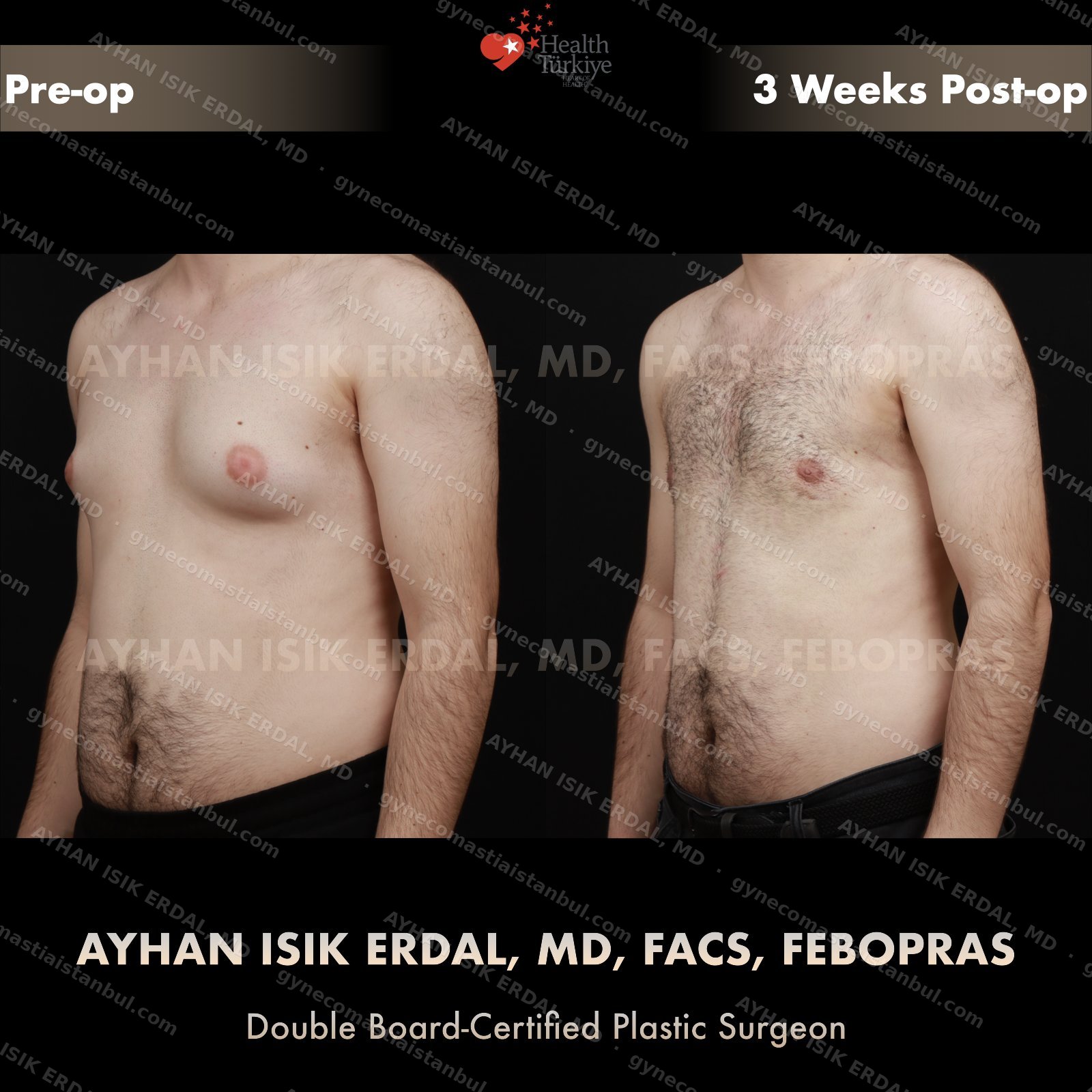
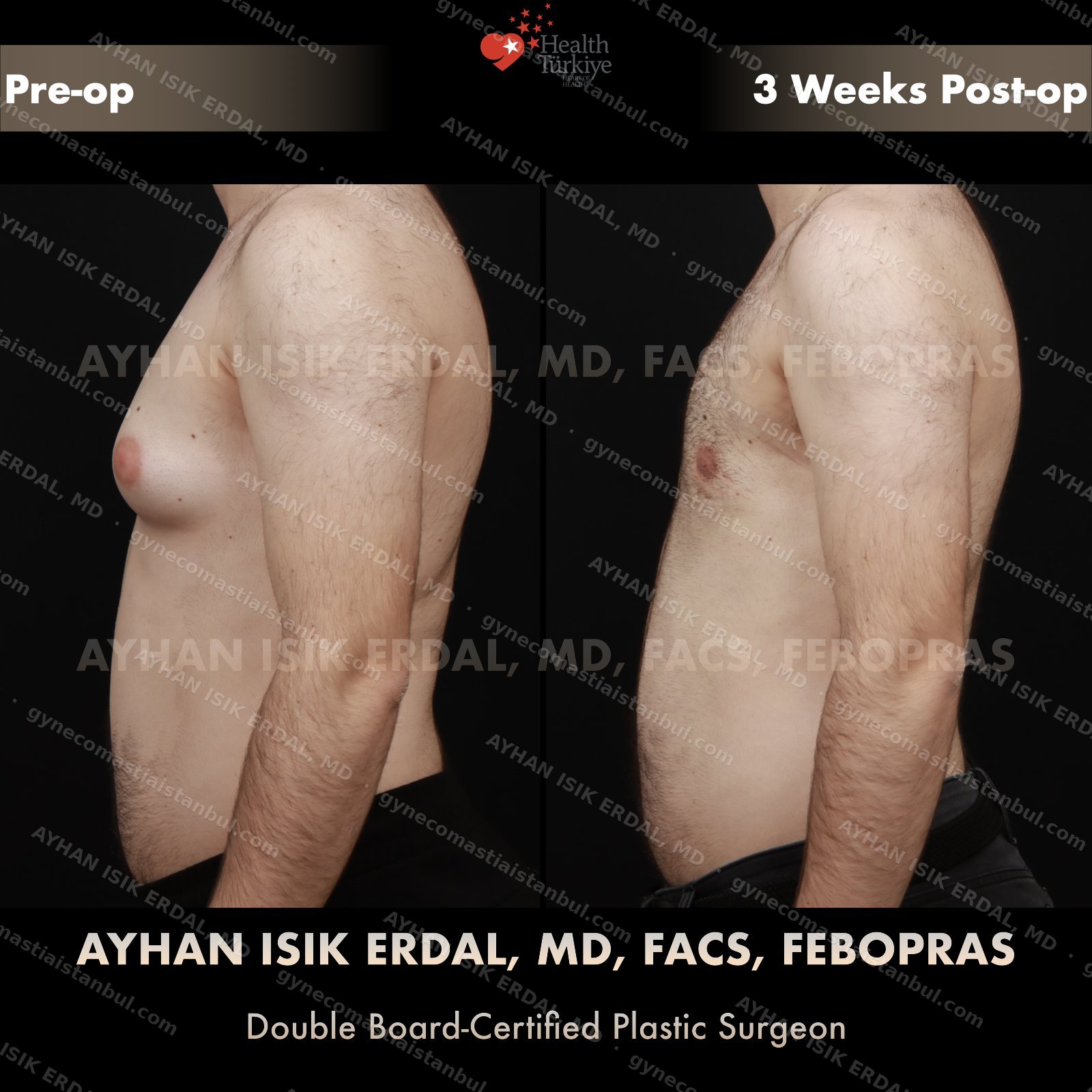
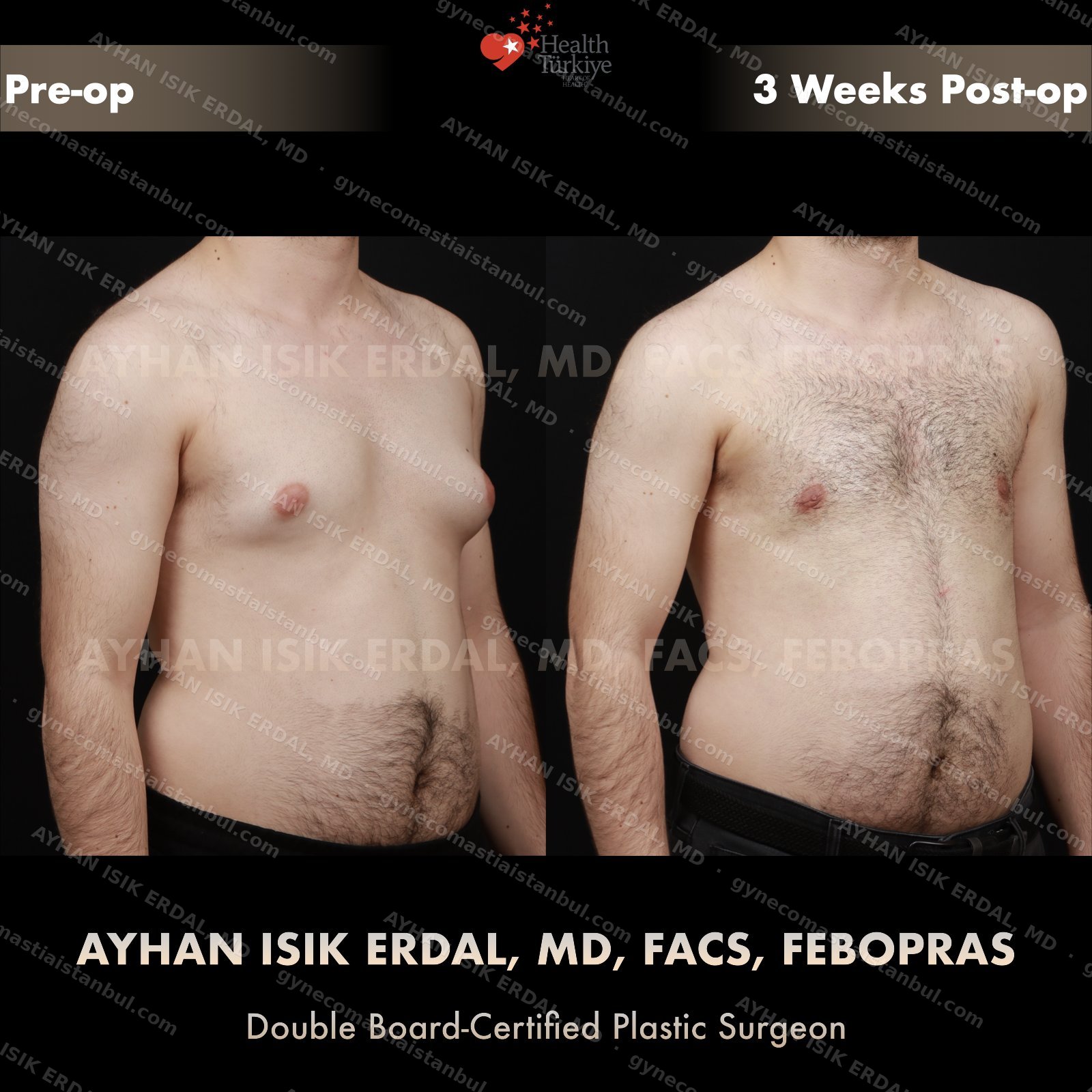
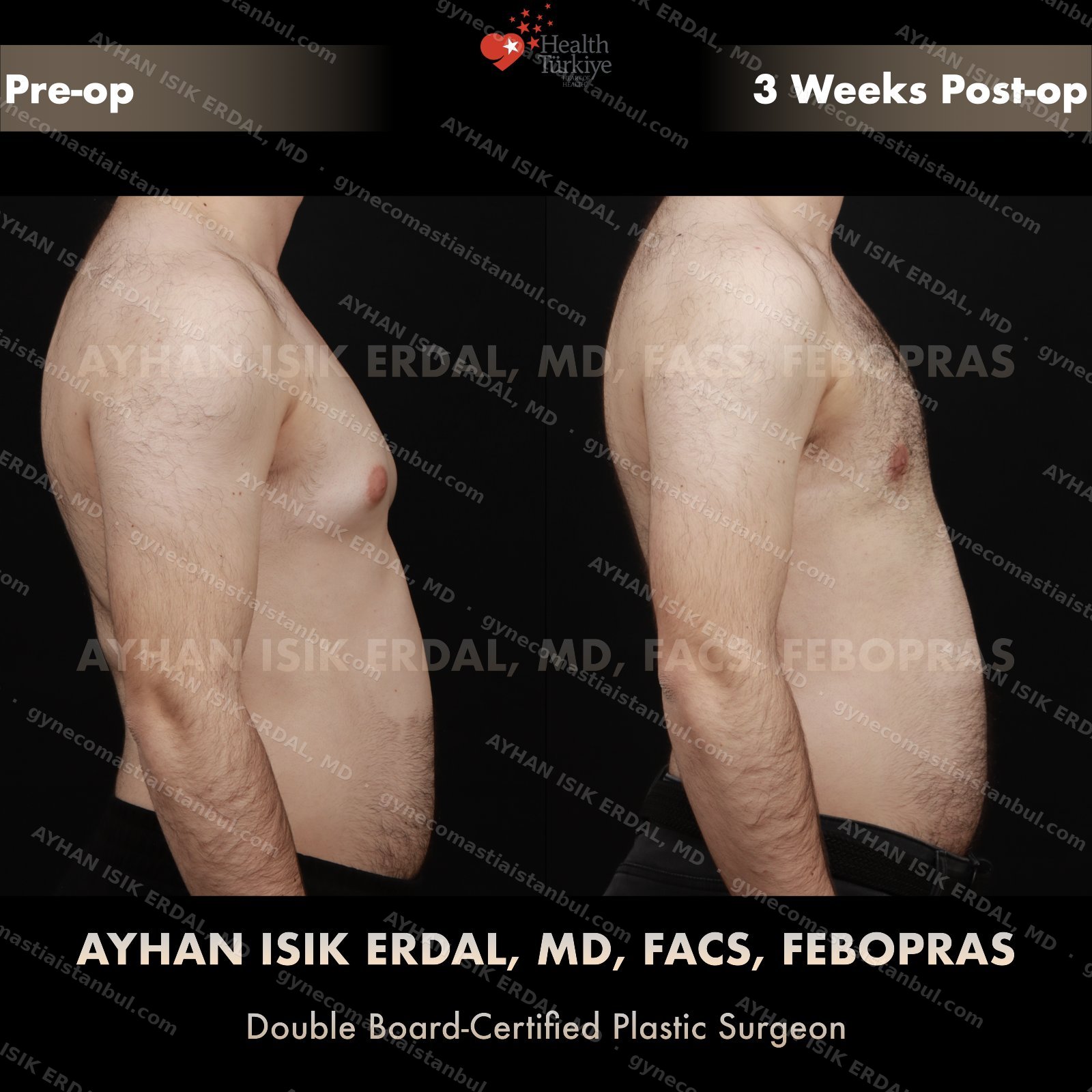
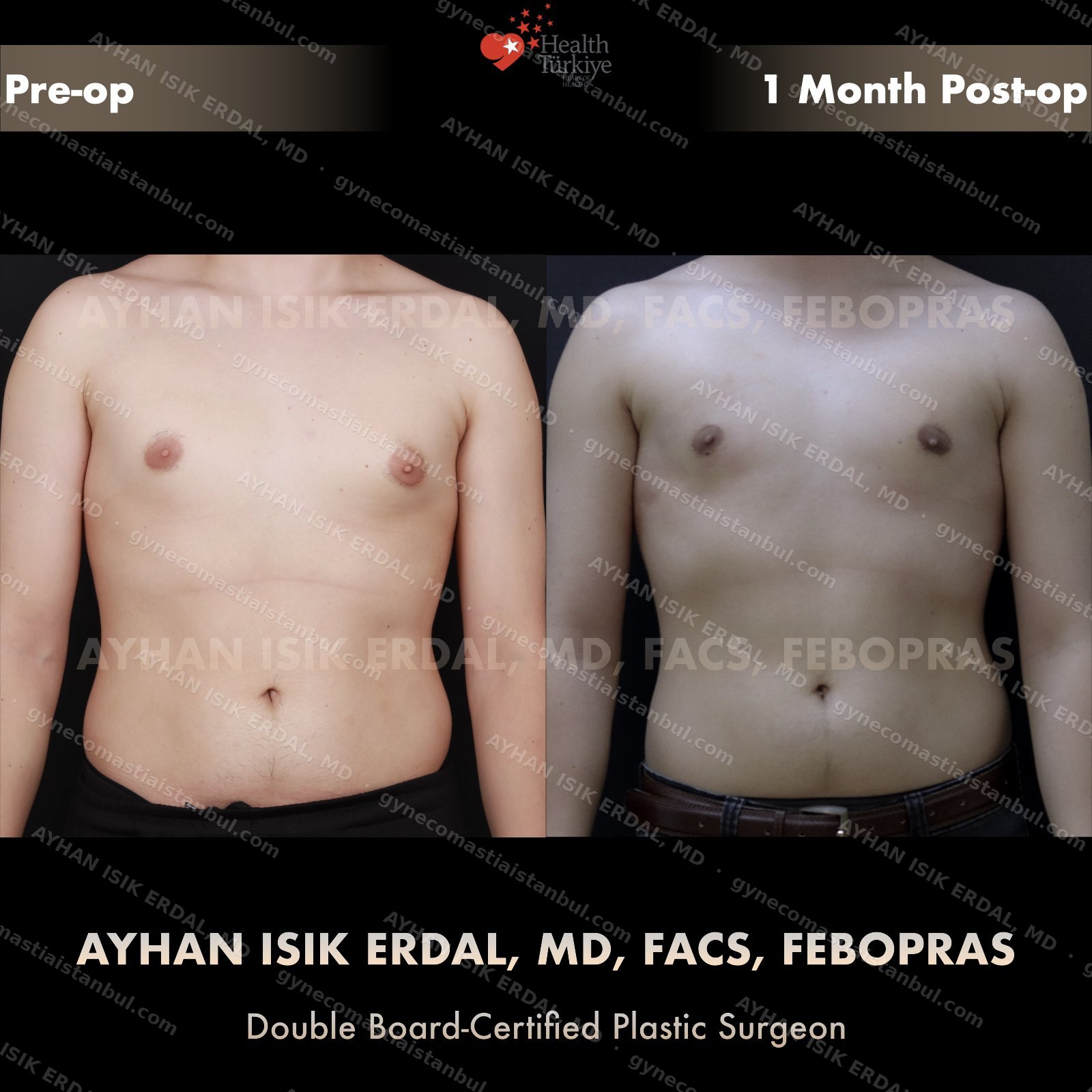
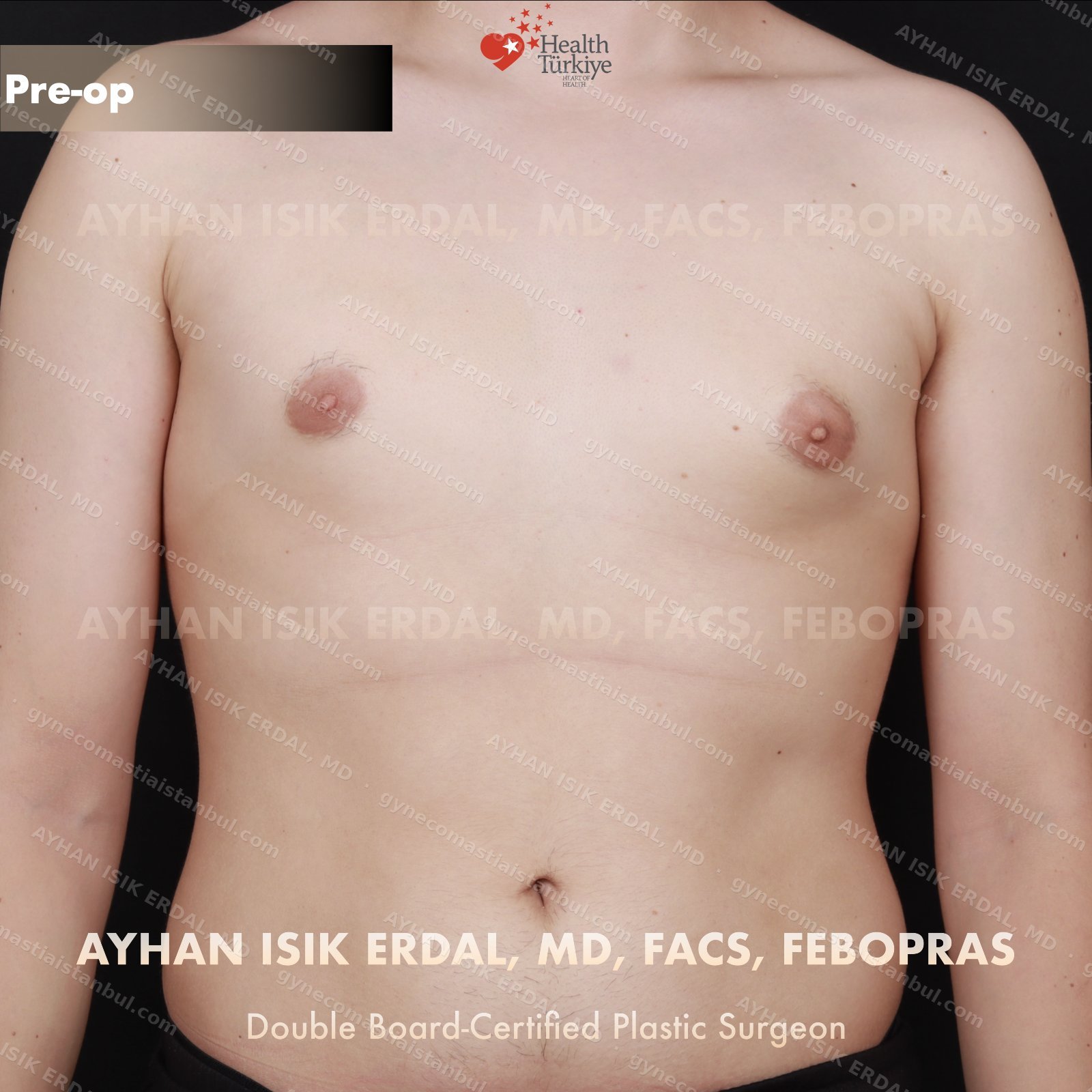
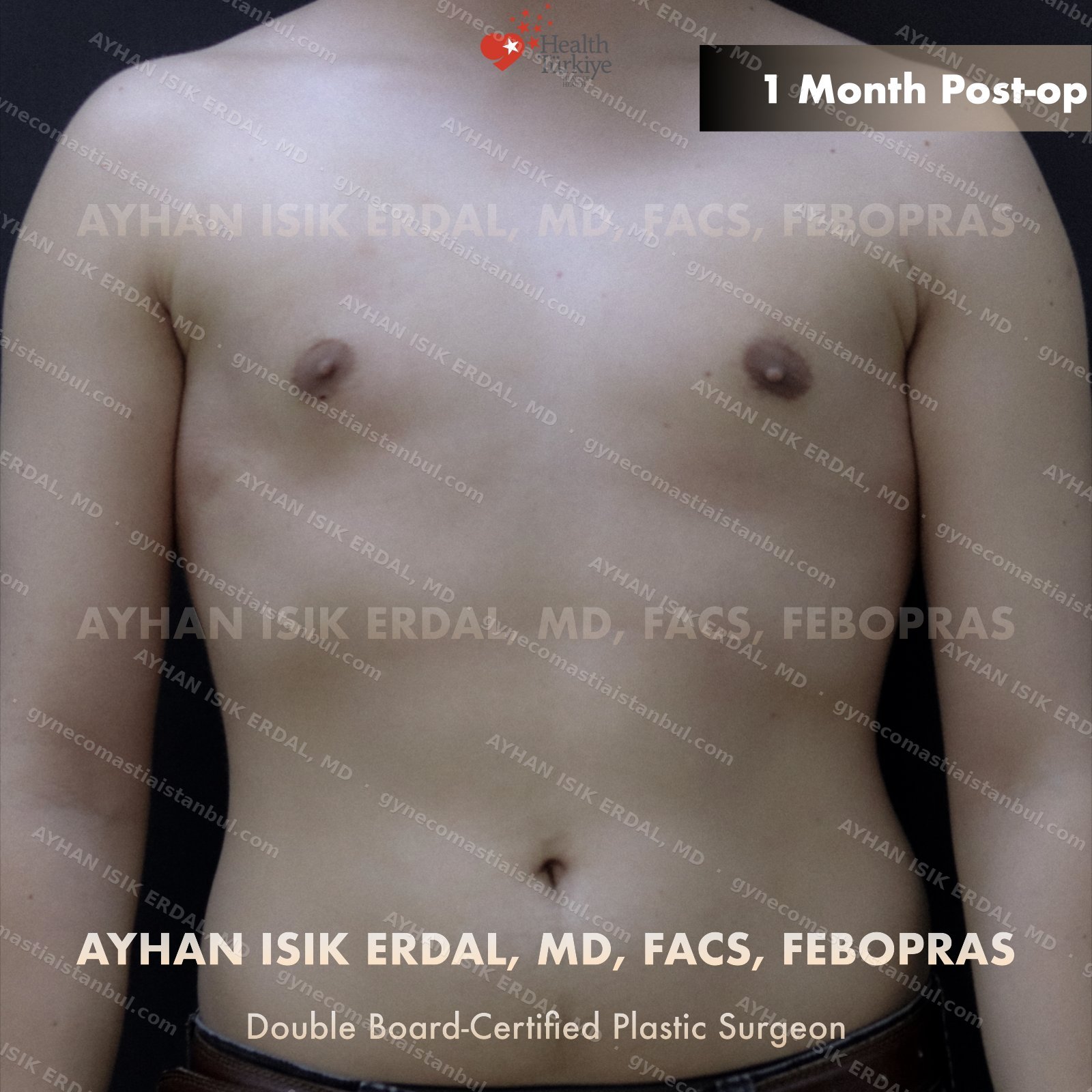
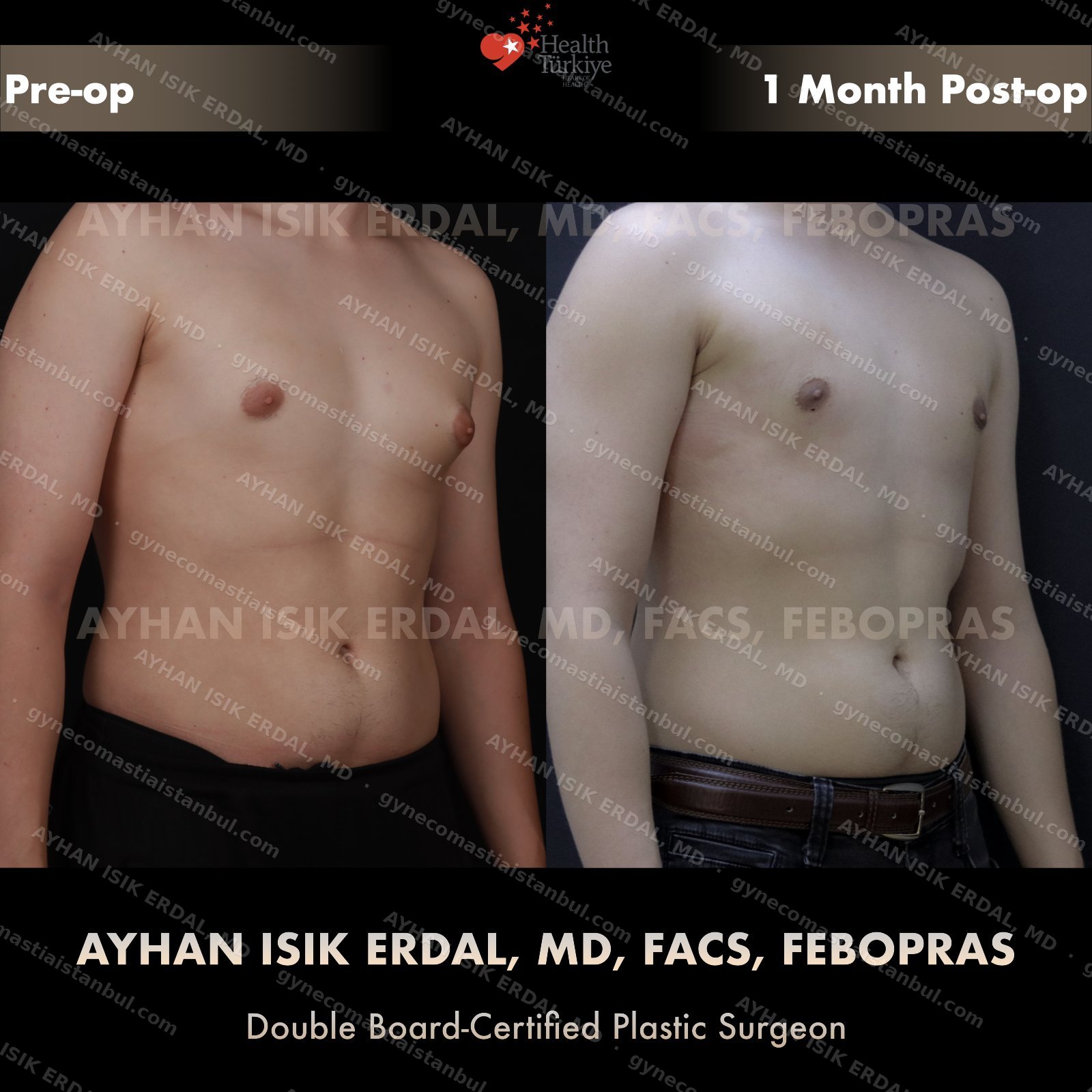
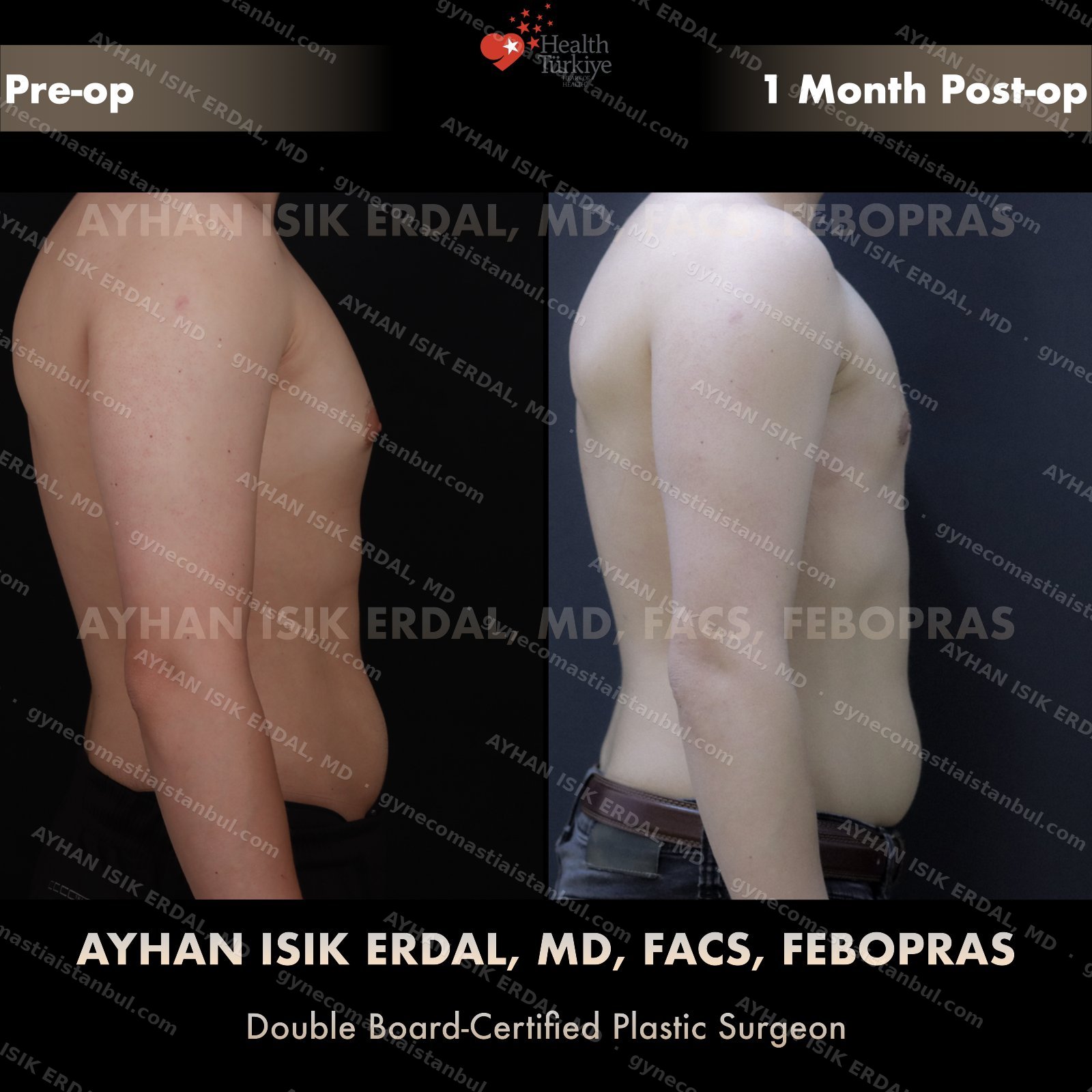
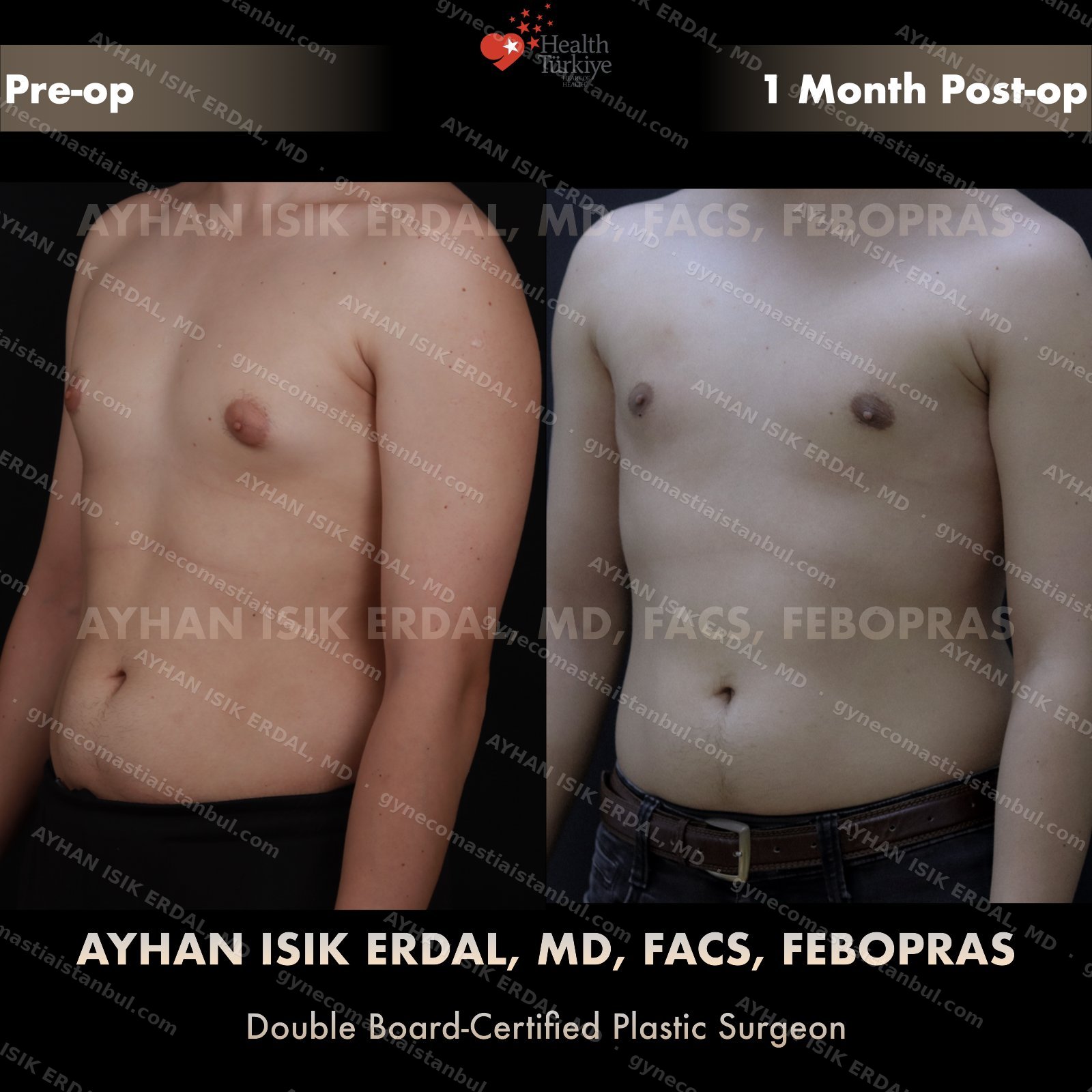
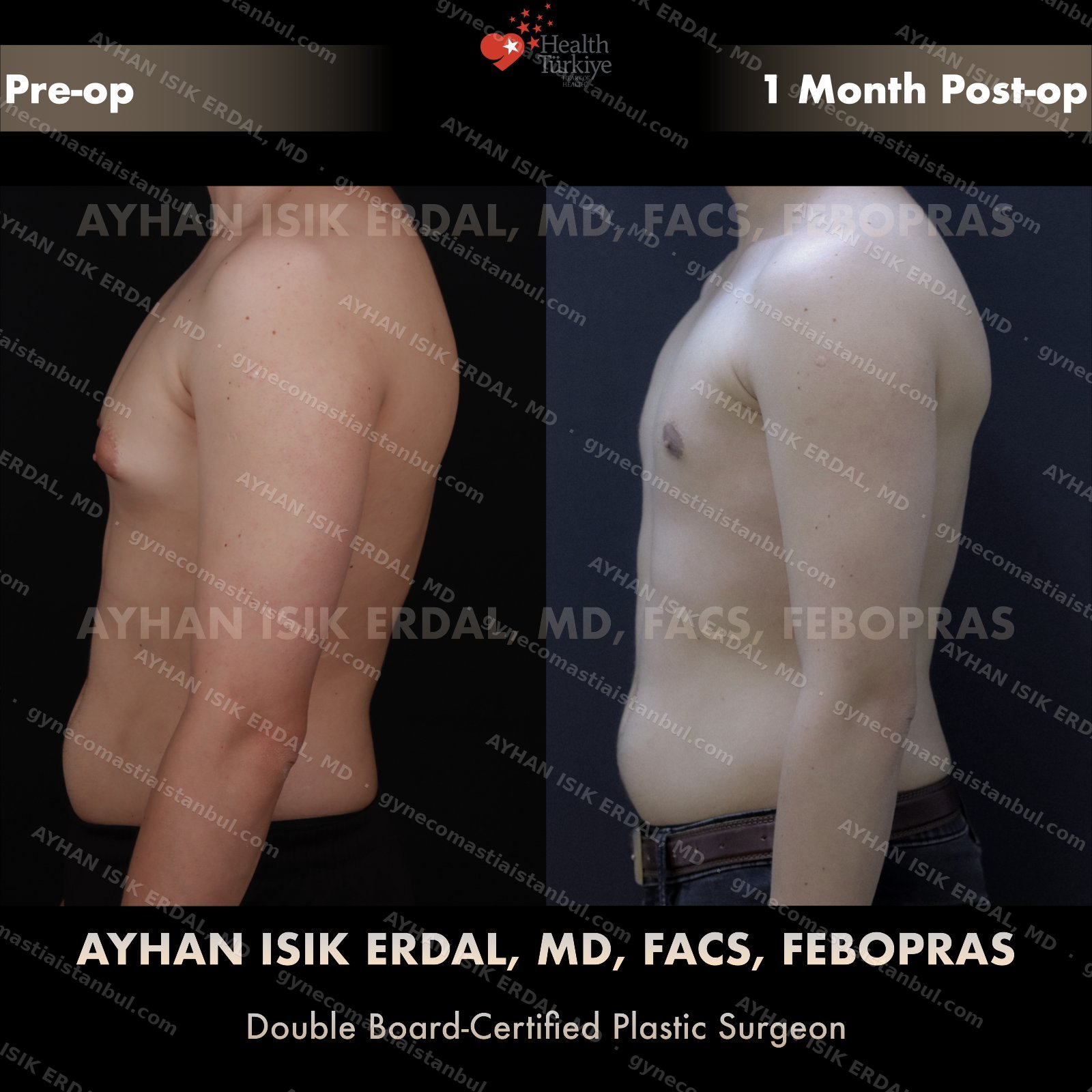
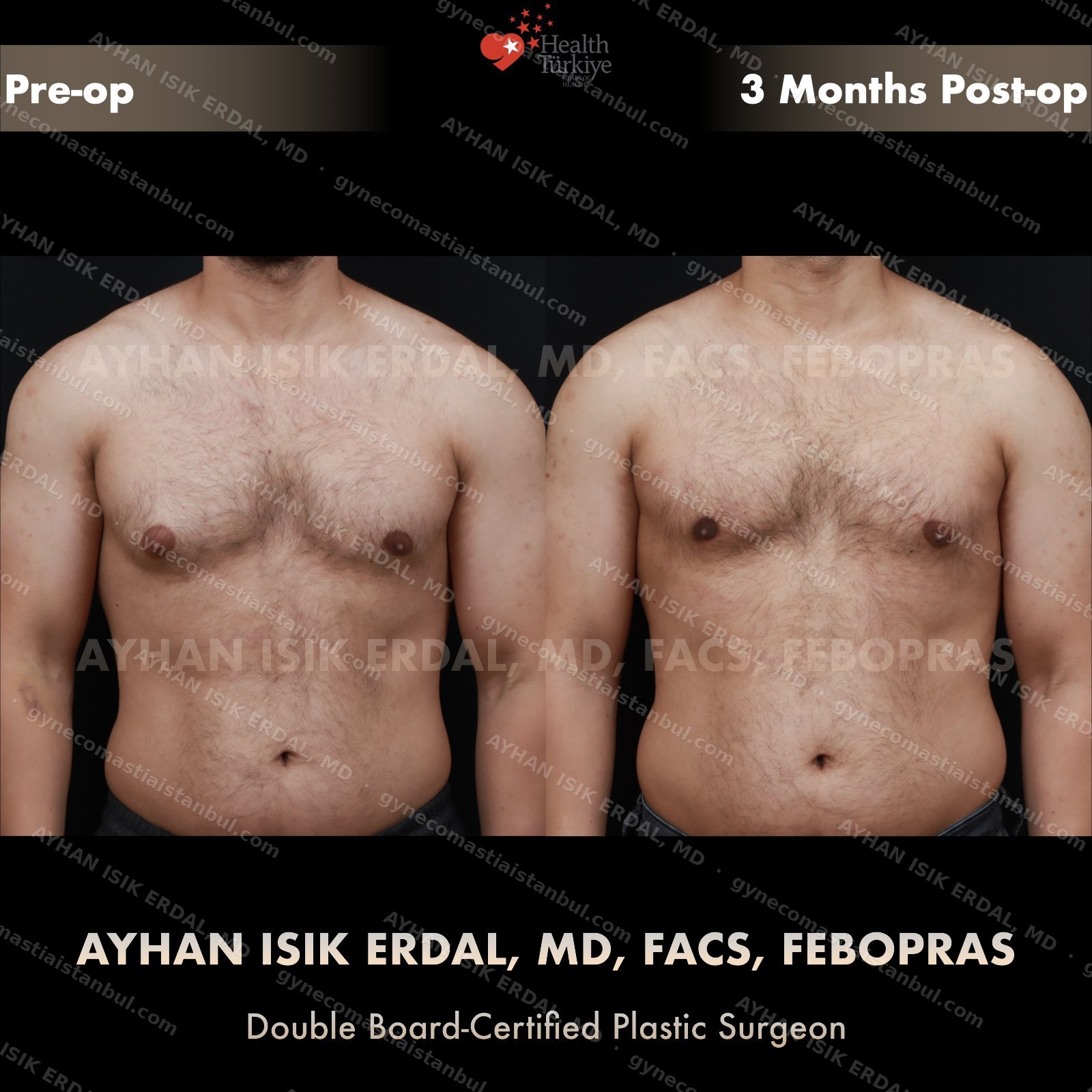
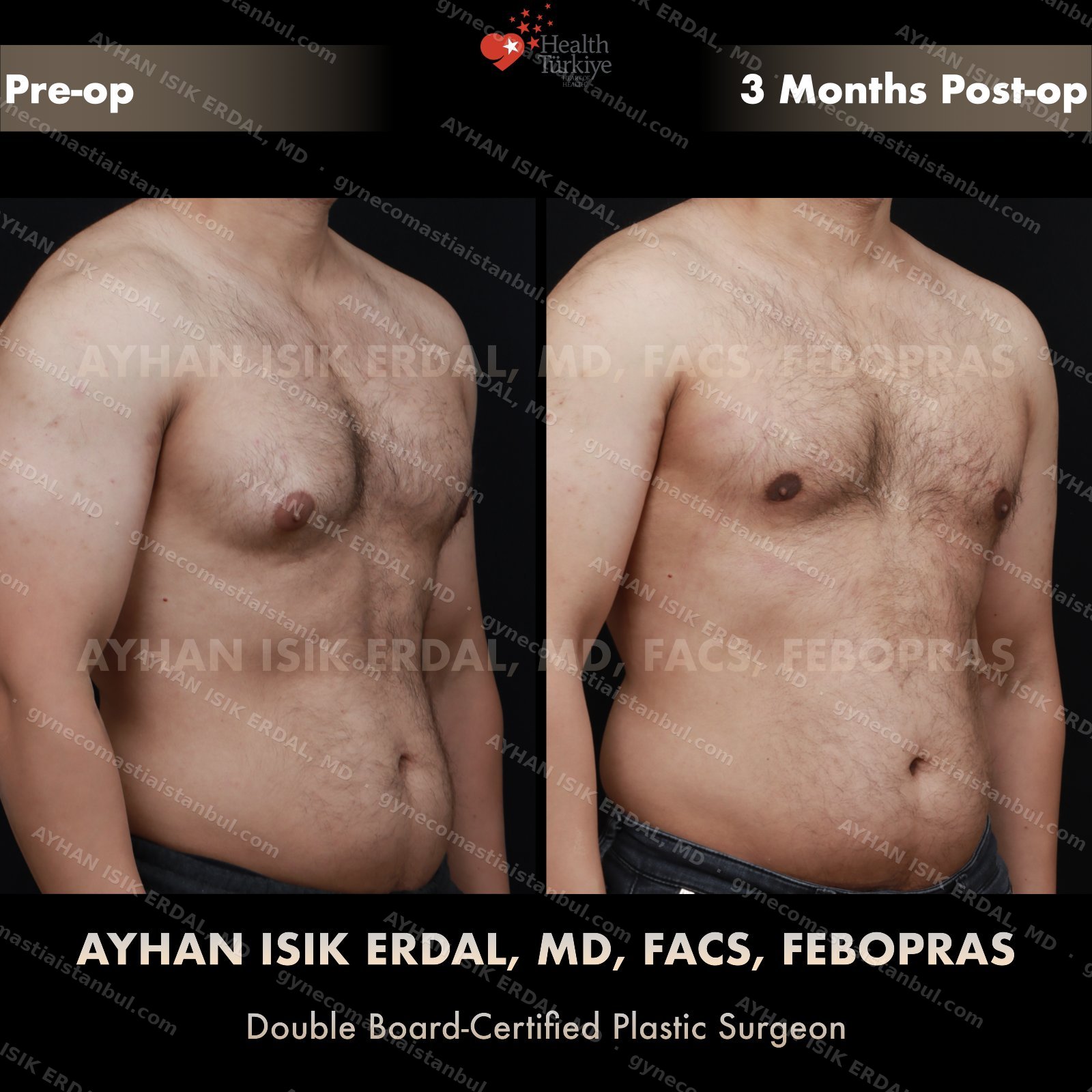
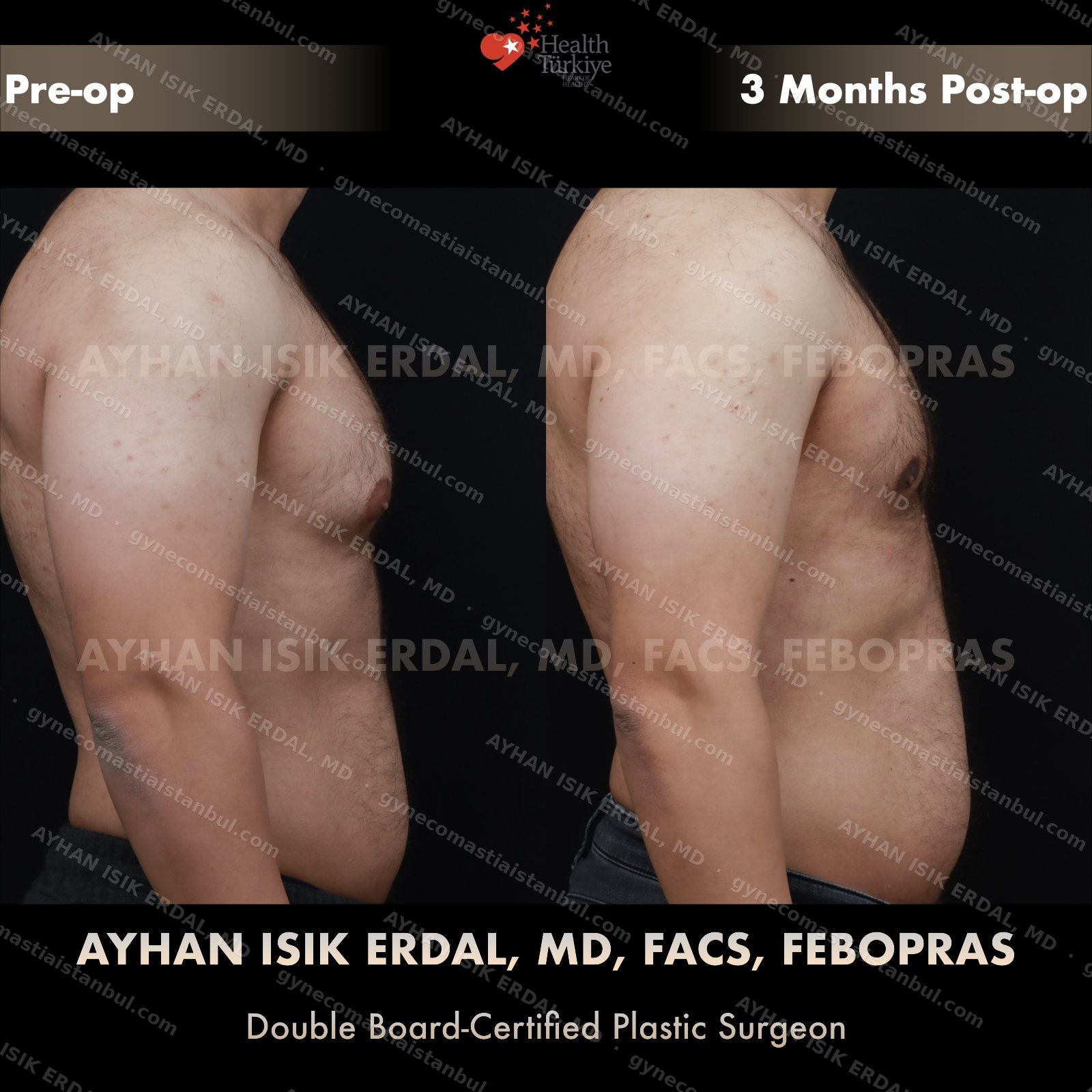
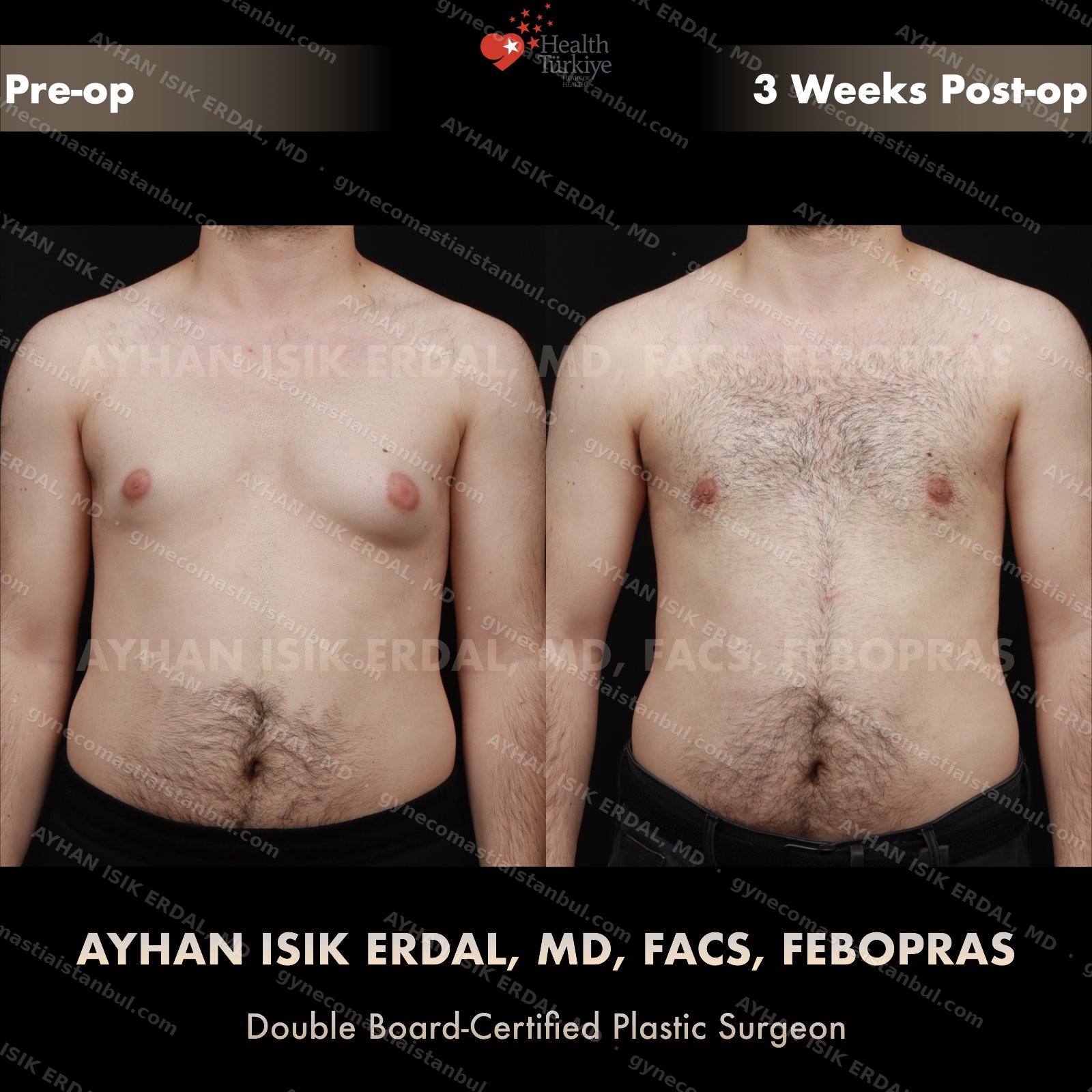
Before & after results

Side-by-side pre-operative and post-operative photographs from Dr. Erdal's clinical practice. Each composite shows the pre-operative state on the left and the post-operative result on the right. All photographs published with explicit written consent; patient identities are protected.

Click any image to enlarge. Photographs published with written patient consent.

The male chest — gland, fat and skin

Gynecomastia surgery works on three tissue layers: subcutaneous fat, glandular breast tissue behind the nipple-areolar complex, and the skin envelope. The proportion of each component determines the technique — and the technical decisions made for a Simon Grade I liposuction case are fundamentally different from a Grade III skin-excision case.

pectoralis major glandular tissue fat nipple-areolar complex periareolar incision skin

Glandular tissue (the "true" gynecomastia component)

Firm, rubbery tissue sitting directly behind the nipple-areolar complex, originating from ductal and stromal proliferation. Cannot be removed by liposuction — requires direct surgical excision or extraction via pull-through technique. Felt as a discrete disc on the pinch test.

Subcutaneous fat (the "pseudo" component)

Soft, diffuse tissue overlying the gland and extending across the chest wall. Responds well to liposuction. In pure pseudogynecomastia (fat only, no gland), liposuction alone provides excellent results without an open incision.

Skin envelope

In Grade I–IIa the skin retracts well after tissue removal. In Grade IIb–III the skin has stretched beyond its elastic capacity and requires tightening — either through conservative periareolar skin excision or, in severe cases, formal skin resection with nipple-areolar repositioning.

Periareolar incision

The incision arcs along the inferior hemisphere of the areolar border. This position places the healed scar at the natural pigment transition, effectively hiding it. No visible scars on the lateral or inferior chest wall — a key reason this technique is preferred over older lateral-incision approaches.

The four grades of gynecomastia

The Simon classification (Simon et al., 1973) is the standard framework for grading gynecomastia severity and matching it to the appropriate technique. Grading at consultation — not at surgery — drives honest discussion of scar expectations and recovery timeline.

I · Mild

Minor enlargement, no skin excess

Small button of glandular tissue plus minimal fat. Skin envelope is appropriate to the new, reduced contour. Often missed clinically because the protrusion is subtle — but the tissue feels firm and discrete at the pinch test.

IIa · Moderate

Moderate enlargement, no skin excess

Clear visible protrusion with both glandular and adipose components. Skin tone is still adequate and will retract after tissue removal. The most common presentation in athletic men and the ideal candidate population for pull-through technique.

IIb · Moderate-large

Moderate enlargement, minor skin excess

Larger tissue volume with early skin laxity at the inferior pole. Skin will retract partially but benefits from conservative periareolar skin excision for an optimal contour. Nipple position is typically acceptable.

III · Severe

Marked enlargement, significant skin excess

True breast-like appearance with ptosis (sagging) and inferior displacement of the nipple. Skin excess is significant and does not retract. Full skin excision required, with repositioning of the nipple-areolar complex to restore male chest proportions.

Simon Grade is assigned at clinical examination. WhatsApp photos (standing, arms at sides, frontal and both obliques, good lighting) allow a preliminary grade estimate during initial triage — final grade is confirmed at in-person consultation. Rohrich's classification (2003) is an alternative system used in some centres; the Simon system remains most widely cited.

Comparing the five surgical techniques

Each technique has a defined indication, scar profile and recovery trajectory. The choice is driven by Simon grade and the glandular-to-fatty tissue ratio — and occasionally by patient priorities around scar visibility.

Technique Best indication Scar Anaesthesia OR time Recovery
Liposuction only Pseudogynecomastia — pure fat, no gland 3–4 mm puncture (not true scar) Local + sedation or GA 45–75 min 2–3 days desk work
Pull-through technique Simon I–IIa, mixed glandular-fatty Small periareolar puncture General anaesthesia 1–1.5 h 3–5 days desk work
Subcutaneous mastectomy (gland excision) Simon IIa–IIb, dense fibrous gland Inferior periareolar arc General anaesthesia 1.5–2 h 5–7 days desk work
Periareolar skin excision + gland Simon IIb with moderate skin excess Circumareolar (donut) or crescent General anaesthesia 2–2.5 h 7 days desk work
Skin excision + NAC repositioning Simon III, breast-like with ptosis Circumareolar + vertical / anchor General anaesthesia 2.5–3 h 10–14 days desk work

Return to upper-body training (chest, shoulders) is universally at week 6 regardless of technique. Recovery times above refer to desk/office work; physical jobs require 7–14 days. Compression vest is continuous for 4–6 weeks.

Complication profile — honest figures

Gynecomastia surgery has one of the most favourable complication profiles in aesthetic body contouring — but it is not zero-risk. Figures below reflect aggregated international literature for contemporary technique. Steroid users and higher Simon grades have elevated rates, discussed individually at consultation.

1–3%
Haematoma

Post-operative haematoma

The most common acute complication. Presents within 24–48 hours as unilateral tightness, swelling and pain. Managed by compression; rarely requires theatre return. Pre-operative aspirin / NSAID avoidance reduces this risk.

Higher in anabolic steroid users due to elevated haematocrit.
1–4%
Seroma

Seroma formation

Fluid collection in the operative cavity, most common after extensive liposuction. Managed by compression vest adherence and clinic aspiration if required. Rarely recurrent.

Grade III cases have higher rates.
3–8%
Contour irregularity

Rippling / crater deformity

Over-resection of retroareolar tissue produces the "crater" deformity — a concavity behind the nipple. Avoided by preserving a 5–8 mm retroareolar disc intentionally. Most common cause of revision surgery in gynecomastia. Fat grafting corrects moderate cases.

Rohrich 2003 review — single most common cause of revision.
5–10%
Nipple sensation change

Altered nipple sensation

Transient reduced sensation is common (usually resolves by month 3–6). Permanent numbness is rare (under 1%). Hypersensitivity can occur in the first weeks and resolves with gentle desensitisation techniques (silicone scar therapy, massage).

Higher rate in large Grade III resections.
1–3%
Hypertrophic scar

Scar hypertrophy

Raised, pink scar at the periareolar incision. More common in darker skin types and in patients with a personal/family history of keloids. Addressed with silicone gel, intralesional steroid injection, or occasionally laser. Preventive scar care for 6 months reduces incidence.

Fitzpatrick IV–VI skin types higher rate.
2–7%
Recurrence

Glandular regrowth / fat recurrence

True glandular recurrence is uncommon when the full disc is excised. Pseudogynecomastia (fat) can recur with significant weight gain. In ongoing anabolic steroid use, recurrence rates climb sharply — durable results require addressing the underlying cause alongside surgery.

Steroid users: 15–25% if use continues.

The critical modifiable factor in gynecomastia outcomes is root-cause management — anabolic steroid cessation, medication review, weight stability. Surgery without addressing the cause delivers a short-term result in a long-term body.

Pre-operative preparation

The patient's honest disclosure at consultation determines the quality of the surgical plan. Nothing shared is judged; everything shared improves your outcome. The variables below are reviewed at every gynecomastia consultation.

Anabolic steroid / SARM history

Past or ongoing use is one of the most common underlying causes in men aged 20–40. Disclosed without judgement — it is clinical information, not a moral assessment. Current users: a minimum 3-month cycle break pre-operatively is strongly advised, with a documented plan to discontinue or pause post-operatively. Continued use after surgery substantially raises recurrence risk.

Medication review

Several common medications cause drug-induced gynecomastia: spironolactone, cimetidine, finasteride (chronic high-dose), ketoconazole, some antipsychotics, protease inhibitors. When identified, discontinuation under the prescribing physician's guidance may regress recent-onset tissue before surgery is needed.

Hormonal workup when indicated

Not every gynecomastia requires blood tests. Indications for workup: recent onset (under 6 months), rapid progression, unilateral presentation, painful or tender mass, persistent pubertal gynecomastia over age 20. Panel: testosterone, LH, FSH, prolactin, oestradiol, hCG, liver and thyroid function. Endocrinology referral if abnormal.

Weight stability

Stable within 3–5 kg for 3+ months. Operating on a still-changing body, particularly during an active weight-loss phase, produces a result calibrated to the wrong anatomy. Higher BMI (over 30) is accepted case-by-case, with frank discussion of outcome expectations and elevated complication rates.

Complete smoking cessation

Minimum 4 weeks before surgery, 4 weeks after — ideally longer. Smoking significantly elevates wound healing complications at the periareolar incision, raises nipple complication rates, and impairs skin retraction (important in borderline Grade IIb cases). Nicotine replacement patches also discouraged during the peri-operative window.

Realistic expectations

The periareolar scar — however discreet — is permanent. Minor contour asymmetries may persist. Body dysmorphia (perceiving severe deformity that does not match examination) is screened at consultation and is a relative contraindication to surgery until addressed. Honest pre-operative conversations are what produce satisfied post-operative patients.

Assoc. Prof. Dr. Ayhan Işık Erdal
Dr. Ayhan Işık Erdal — Plastic Surgeon Istanbul Dr. Erdal — ACS Clinical Congress 2025, FACS Induction

Assoc. Prof. Dr. Ayhan Işık Erdal

MD, FACS, FEBOPRAS · Plastic, Reconstructive & Aesthetic Surgery

  • Fellow, American College of Surgeons (FACS) — inducted ACS Clinical Congress 2025
  • FEBOPRAS — Fellow, European Board of Plastic, Reconstructive & Aesthetic Surgery
  • Associate Professor — Plastic Surgery, Gazi University Faculty of Medicine
  • International training: Memorial Sloan Kettering (USA) & Ghent University Hospital (Belgium)
  • 15+ years of surgical experience; subspecialty focus in body contouring & breast surgery
  • Award-winning surgeon: ISAPS World Congress 2023 — Gold & Bronze Award
  • 30+ peer-reviewed publications in international journals
  • Member of ACS, ASPS, ISAPS, EBOPRAS & TPRECD
  • Ministry of Health — International Health Tourism Authorization
  • Consultations conducted personally in English — no third-party agencies, complete confidentiality

"Gynecomastia is the operation where men arrive with the most shame and leave with the most relief. The privilege of doing it well is not just technical — it is in how the conversation is held, from the first message to the final follow-up."

— Assoc. Prof. Dr. Ayhan Işık Erdal
ACS FACS, ASPS, ISAPS, EBOPRAS, TPRECD affiliations
Frequently asked clinical questions
True gynecomastia involves glandular tissue — felt as a firm, rubbery disc directly behind the nipple-areolar complex. Pseudogynecomastia is fat accumulation without glandular growth — felt as soft, diffuse tissue across the chest. The pinch test at the areolar border distinguishes them: firm gland resists compression; fat compresses easily. Treatment differs fundamentally — pseudogynecomastia responds to liposuction alone; true gynecomastia requires gland removal. Ultrasound clarifies borderline cases.
Simon's 1973 grading system: Grade I — minor enlargement, no skin excess; Grade IIa — moderate enlargement, no skin excess; Grade IIb — moderate enlargement with minor skin excess; Grade III — marked enlargement with significant skin excess. Grade drives technique: I–IIa treated with liposuction or pull-through; IIb typically requires gland excision ± conservative skin; III needs skin excision and nipple-areolar repositioning.
The incision is placed along the inferior hemisphere of the areolar border — the periareolar approach. The mature scar sits at the natural pigment transition between the areola and surrounding skin, which masks it effectively. At social distance it is undetectable; at close shirtless view after 6–12 months of healing it appears as a faint line. For liposuction-only cases, access is via a 3–4 mm puncture at the lateral chest or axilla — not a true scar.
A minimally invasive approach for mixed glandular-fatty gynecomastia. After aggressive subcutaneous liposuction, the remaining fibrous gland is grasped with forceps through the small liposuction port and delivered (pulled through) without enlarging the incision. Avoids the classical periareolar open scar while still removing the glandular component. Best for Simon Grade I–IIa where the gland is not overly dense or adherent to underlying pectoralis.
Light lower-body cardio (walking, stationary bike) from day 10–14. Full cardio from week 3–4. Upper-body resistance training — chest, shoulders, arms — is withheld for 6 weeks. Breaking this rule is the single most common cause of haematoma and delayed healing in this patient population. Progressive return to full chest/press training from week 6 with gradually increasing loads. Pre-operative bench press strength typically regained by week 10–12.
Absolutely yes — confidentially and without judgement. Steroid-induced gynecomastia (from aromatisation of exogenous testosterone to oestrogen) is one of the most common causes in men aged 20–40. Full disclosure guides technique selection, informs hormonal workup, and allows discussion of recurrence risk if use continues. Clinical confidentiality is absolute. Disclosure is for your medical safety and best outcome — not a moral assessment.
Hormonal workup is indicated when: onset is recent (under 6 months), enlargement is rapid or painful, presentation is unilateral, there is a palpable hard or fixed mass distinct from the normal glandular disc, or pubertal gynecomastia persists beyond age 18–20. Panel: testosterone (total and free), LH, FSH, prolactin, oestradiol, hCG, liver and thyroid function. If abnormal, endocrinology referral precedes surgery. Longstanding stable gynecomastia in an otherwise healthy adult rarely needs full workup.
True glandular recurrence is uncommon (2–7%) when the full disc is excised and the underlying cause is addressed. Persistent anabolic steroid use, unmanaged medications (spironolactone, anti-androgens), or significant weight gain can cause apparent recurrence. Continued steroid use can push recurrence rates to 15–25%. The most durable results come from treating the underlying cause alongside the surgery.
Drains are not routinely used in most gynecomastia cases. Small-calibre closed drains may be placed in Grade III cases with larger resections, after extensive liposuction, or when haematoma risk is elevated (steroid users, elevated haematocrit). When used, drains are removed at 2–5 days when output falls below threshold. The compression vest itself provides the haemostasis and tissue adherence that drains are typically used for.
Continuously for 4–6 weeks (removed only for showering). During week 7–8 it can be worn daytime-only or during exercise only. The vest reduces swelling, shapes the healing tissue to the new chest contour, reduces seroma risk, and prevents the subcutaneous tissue from recoiling into a poorly adherent cavity. Skipping compression is the single most common patient-side cause of a suboptimal contour.
In early pubertal gynecomastia, watchful waiting for 12–18 months allows spontaneous resolution in most cases. In adult-onset gynecomastia from an identifiable drug cause (spironolactone, cimetidine, anti-androgens), discontinuation may regress recent-onset tissue. Tamoxifen has modest evidence in early disease (under 6 months). For established gynecomastia of more than 12 months duration with persistent gland, surgery is the only reliable treatment — the fibrotic stage does not regress pharmacologically.
Contemporary gynecomastia surgery has a favourable profile. Haematoma 1–3%, seroma 1–4%, contour irregularity 3–8% (the "crater deformity" from over-resection is the most common revision cause), nipple sensation change 5–10% (most transient, permanent numbness under 1%), scar hypertrophy 1–3%, recurrence 2–7% (higher in continuing steroid users), revision for contour refinement 5–10%. Grade III, steroid users, and higher BMI have elevated rates across categories.
Technique and grade determine choice. Liposuction-only for pseudogynecomastia can be performed under local anaesthesia with oral sedation in selected cases. Pull-through and gland excision are typically under general anaesthesia for patient comfort and surgical precision. Grade III with skin excision is always under GA. Operative time ranges from 1 hour (liposuction-only) to 2.5–3 hours (Grade III).
In-depth technique references

Extended reading on the surgical techniques, underlying causes, and recovery protocols specific to gynecomastia surgery. Written for patients who prefer detail.

A word to international patients

Two short messages from Dr. Erdal — a welcome and practical tips for planning your journey to Istanbul.

Welcome to International Patients
Tips for International Patients
Discreet, comprehensive care for patients travelling

International patients receive VIP airport transfer, coordinated accommodation at Antwell Suites (ground-floor clinic for daily follow-ups), pre-operative hospital workup, 1-night hospital stay (or day-case for smaller procedures), compression vest, and full follow-up through return home.

Antwell Suites Istanbul

Recovery-friendly 1+1 suites with full kitchen, separate bedroom and spacious bathroom — situated above a ground-floor clinic where Dr. Erdal's team conducts post-operative checks during the first week. Designed specifically to minimise travel when mobility is limited.

Standard length of stay for gynecomastia is 5–7 days. Grade III cases with skin excision may require 7–10 days. Companions (partner, friend) welcome at no additional charge — many international patients travel with one.

1+1 Suite Full kitchen Ground-floor clinic VIP transfer included English-speaking team 5–7 day programme
Antwell Suites Istanbul — exterior Antwell Suites — living room Antwell Suites — bedroom Ministry of Health International Health Tourism Authorization certificate
Request a confidential consultation

Every consultation is reviewed personally by Dr. Erdal with complete confidentiality. Please include standing frontal and oblique photos (arms at sides), height and weight, any relevant medical/medication history, and — if applicable — anabolic steroid or SARM history. All information is confidential. Response within 24 hours.

💬
WhatsApp — direct to surgeon
+90 544 850 72 32
📷
Instagram
@dr.ayhanisikerdal
📍
Clinic
Teşvikiye Caddesi No:9/12 · Şişli · Istanbul
⚕️
MoH Authorization
Certificate No: 2026034015610080000444996

Or message on WhatsApp — both treated with full confidentiality

✓ Thank you — your confidential consultation request has been received. Dr. Erdal personally reviews every case; response within 24 hours.

All clinical information kept strictly confidential. International consultations conducted in English.

Ministry of Health international tourism authorization

Dr. Erdal's clinic holds the Republic of Turkey Ministry of Health International Health Tourism Authorization — the legal prerequisite for treating international patients in Turkey. Any clinic treating international patients without this authorization is operating outside the law.

International Health Tourism Authorization Certificate — Republic of Turkey Ministry of Health

Certificate No: 2026034015610080000444996 · Issued: 10.03.2026 · Republic of Turkey Ministry of Health, General Directorate of Health Services